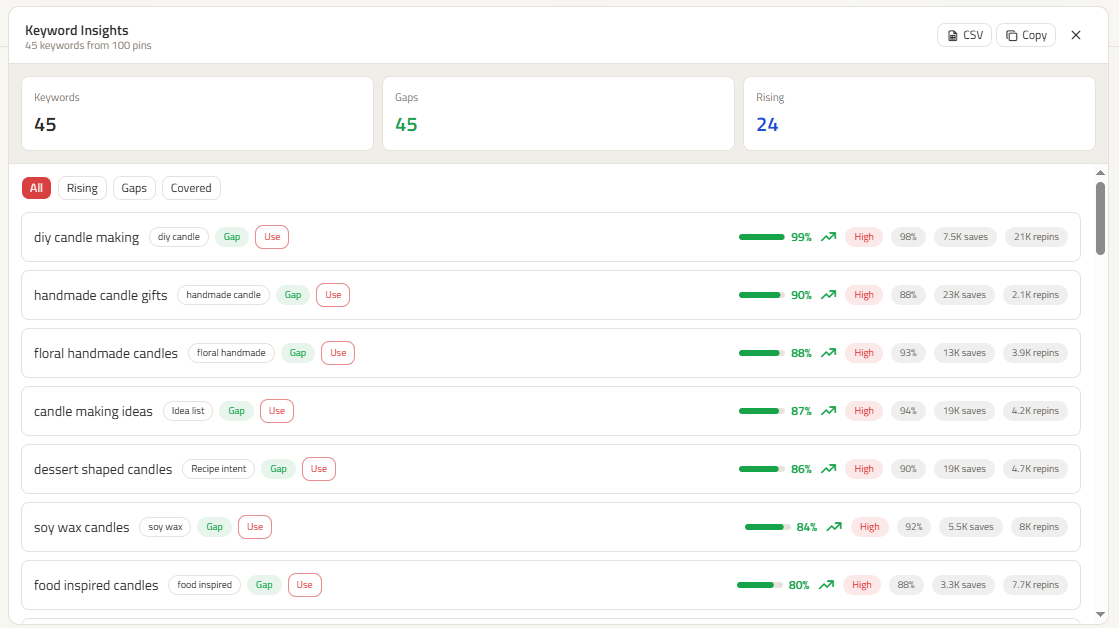
Conducting a thorough Pinterest competitor analysis is the fastest way to discover high-performing pin formats, search keyword gaps, and viral topic angles within your niche. Rather than copying competitors blindly, smart creators analyze top-ranking organic Pins to understand the search formulas, visual hooks, and psychological angles that drive user saves and outbound clicks.
With ClickToPin's integrated discovery tools, you can analyze organic search evidence in Radar, plan differentiated content angles in Planner, and generate unique 5-lane Pin variations in Workspace.
What is Pinterest competitor analysis?
Pinterest competitor analysis is the systematic process of evaluating rival accounts, top-ranking search Pins, visual design patterns, and board structures to uncover content opportunities. Because Pinterest is an intent-driven search engine, analyzing top-ranking Pins reveals exactly what the algorithm favors for specific keyword queries.
| Analysis Factor | What to Look For | Strategic Takeaway |
|---|---|---|
| Pin Headlines | 3-segment formulas, power words, numerical triggers | Understand CTR hooks that grab searcher attention |
| Visual Layouts | 2:3 aspect ratio, multi-zone overlays, color contrast | Identify image styles that stand out in crowded feeds |
| Target Keywords | Primary search terms in title, description, and alt text | Find low-competition long-tail search opportunities |
| Board Architecture | Niche board names, section categorization, keyword density | Structure your own boards for maximum search relevance |
4 Steps to analyze competitors on Pinterest
[1. SEARCH DISCOVERY] ➔ [2. REVERSE-ENGINEER PINS] ➔ [3. SPOT CREATIVE GAPS] ➔ [4. EXECUTE DIFFERENTIATION]
1. Identify your true organic search competitors
Search your primary niche keywords using the Pinterest search bar or Pinterest Keyword Research Tool. Focus on accounts ranking organically in top search positions rather than paid promoted Pins.
2. Deconstruct high-performing Pin formulas
Examine the top 10 Pins for your target keyword:
- Headline structure: Are they using listicle numbers, emotional adjectives, or problem/solution framing?
- Text overlays: Where is text positioned on the 2:3 vertical canvas? Are they leaving clear safe zones?
- Destination content: Do the Pins link to in-depth blog posts, tools, or product landing pages?
3. Identify content and format gaps
Look for weaknesses in competitor Pins:
- Missing keyword terms in descriptions.
- Cluttered or unreadable mobile text overlays.
- Low-contrast imagery that blends into feed backgrounds.
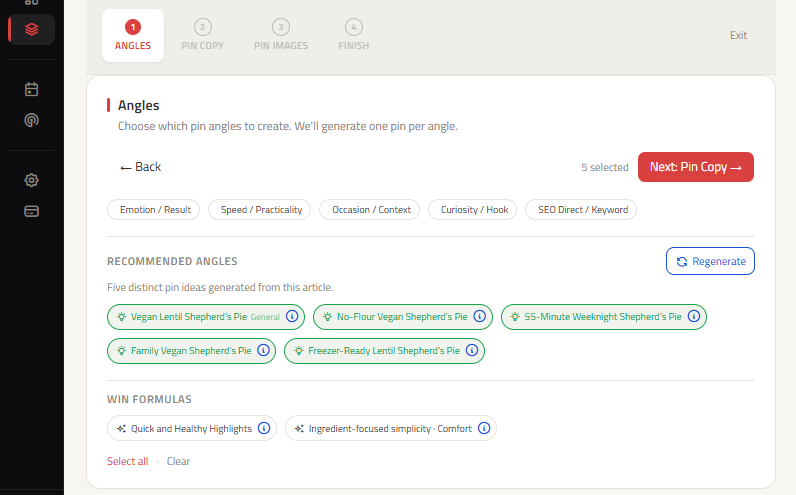
4. Create differentiated 5-angle Pins in ClickToPin
Instead of producing one generic Pin, generate 5 distinct angles using Pinterest Pin Copy:
- SEO Direct: Direct keyword match for search indexing.
- Benefit-Led: Highlights the core user payoff.
- Audience-Specific: Targets beginners, experts, or specific personas.
- Sensory / Visual Hook: Appeals to aesthetics and emotional resonance.
- Method / Technique: Emphasizes speed, simplicity, or step-by-step ease.
Organize these angles on your Pinterest Content Calendar and manage publication pacing inside ClickToPin Planner. If you are currently evaluating third-party scrapers or auto-posters, review our detailed ClickToPin vs BlogToPin comparison to see how multi-angle generation protects account health.
Frequently asked questions
How often should I conduct competitor analysis on Pinterest?
Review competitor search rankings monthly or whenever launching a new content cluster to stay ahead of seasonal trends and algorithmic shifts.
Is it okay to use similar keywords as competitors?
Yes. Keywords represent shared user search demand. The goal is to target the same high-intent keywords while delivering superior, differentiated Pin designs and destination content.
Can I see competitor Pinterest analytics?
While private metrics like outbound clicks are confidential, you can analyze public engagement signals including board saves, search ranking positions, and follower growth trends.